The new generation of SOPHiA DDM™ Platform - FAQ

What is the new generation of SOPHiA DDM™ Platform?

The new generation of the SOPHiA DDM™ Platform is now live, offering web access alongside the familiar desktop experience, bringing greater flexibility and enhanced performance to our users.

The new generation of the SOPHiA DDM™ Platform is designed to elevate the user experience with integrated access to multimodal analytics modules. Under the new generation of SOPHiA DDM™, genomic, radiomic, and multimodal analytics capabilities will be offered in a single, integrated workspace through the centralized Landing Space. The genomics module is the new web interface for all genomics-related features, introducing a range of new and updated features aiming at delivering more comprehensive information, increasing the frequency of the updates, improving the user-friendliness, and boosting the pathogenic variant identification yield.

Furthermore, the new generation SOPHiA DDM™ Platform is now IVDR certified, guaranteeing the highest standards of quality, safety, and performance. It offers a flexible, single-platform solution that supports a wide range of applications, seamlessly handling both RUO and CE-IVD results.

During the gradual migration of genomics application to the new generation SOPHiA DDM™ Platform, both desktop and web access will be available. Ultimately, the new generation SOPHiA DDM™ Platform accessible through the web will gradually replace the current SOPHiA DDM™ desktop access.

Timelines

Once you are notified about the date of your migration to the new generation of SOPHiA DDM™ Platform, you will have a transition period of three months to fully migrate from the desktop to the web. During this time, you will be able to upload data and create interpretations using both the desktop and web interfaces. However, please note that the ability to open an interpretation will remain restricted to the platform where the interpretation was created.

To ensure a smooth transition, we will provide comprehensive training on the new web interface and its features. At the end of the three-month transition, the ability to upload data and create interpretations via the desktop interface will be disabled. However, you will still have access to the desktop platform until it is decommissioned, allowing you to review previous interpretations, which will not be directly accessible on the web platform. Importantly, all relevant files generated previously on the desktop interface are accessible and downloadable on the new web platform (e.g., VCF, final PDF report, quality reports, full variant table, full CNV table, bam files, target region coverage, FASTQ available for up to 3 months, after that they can be retrieved upon request, etc.).
After February 24, 2027, the desktop interface of the SOPHiA DDM™ Platform will no longer be used for new activity - uploading and interpreting new samples will only be possible on the web platform. You will, however, continue to have access to the desktop interface to open and review past interpretations, until it is fully decommissioned (date to be confirmed).
We are committed to ensuring a smooth and seamless onboarding experience for the transition, with a full training package and close support during your onboarding and adoption period.

The onboarding includes

• live training,
• access to 60+ tutorial videos,
• a detailed user manual and dedicated sessions as needed.
• Throughout your onboarding and adoption process, your sales contact
• and a specialized task force will be there to guide you every step of the way!

Analytical Performance

There will be no changes to analytical pipelines or analytical performance on the secondary analysis. The new platform will bring a new interface with web access and new capabilities, features, and new variant catalogs/databases with no impact in the analytical performance of your applications.
If you are starting or currently enrolled in a MaxCare program you can proceed as planned. The transition to the SOPHiA DDM™ accessible through the web will not affect your current pipeline results. Once all your applications have been migrated, we will ensure a smooth transition to the new platform.

Changes and benefits in the new generation of SOPHiA DDM™ Platform

The new generation of the SOPHiA DDM™ Platform offers the following key benefits:

1) With the new architecture, we can scale, process data more efficiently and quickly respond to your needs and introduce new features faster and more efficiently.

2) Improved user experience via a new web interface with a full set of new features and functionalities to streamline and accelerate your analyses.

3) Multiple benefits related to variant annotation (tertiary analyses) thanks to the release of the enhanced annotation system, which is fully deployed on the new generation of the SOPHiA DDM™ Platform – refer to details below.

4) Significant improvement in the management of user annotations and statistics: we are boosting the way we handle variant identification by applying a comprehensive normalization to fully aggregate disparate variant representations (trimmed, aligned, lifted across reference genomes, etc.) into a normalized, stable, consistent and standardized variant data model.
     i. By relying on normalized identifiers, we ensure consistency across different applications, ensuring that flags are shared between them and that all variants are included in the frequency calculation.
     ii. For variant frequencies, we now use target regions instead of gene symbols to determine whether or not a variant could have been detected for a given application. This results in a more accurate frequency calculation compared to the calculation presented in the desktop interface.

The new and enhanced tertiary annotation system (also referred to as annotation v2) will bring the following combination of new or improved capabilities on the new generation of the SOPHiA DDM™ Platform:

1) Selectable transcripts – providing the ability to define and modify the transcripts based on your needs.

2) Updates to the ACMG automatic classification module – by introducing the point-based ACMG classification based on the latest guidelines for short variants and CNVs.

3) Renovated and improved variant classification algorithm designed for flexibility, interpretability and continuous improvement (SOPHiA DDM™ prediction v2 or ABCD v2).

4) More frequent catalog updates (every 2 months for the main catalogs).

5) New and extended annotations:

   i. Extended and updated gnomAD population frequencies, including gnomAD exomes and genomes, number of homozygotes and genetic ancestry groups, among other gnomAD features.

   ii. New catalogs (REVEL, dbscSNV, latest MANE transcripts, extended ClinVar annotations, cytoband annotation, etc.) and many more coming soon (CADD, gnomAD SV, dbVar, and additional splicing predictors, among others).

   iii. Gene level (constraint and haploinsufficiency) scores.

6) Zygosity is now provided for all short variants.

7) Guideline-compliant HGVS nomenclature, covering DNA (genomic reference sequence, mitochondrial reference sequence and coding DNA reference sequence) and protein based on RefSeq

8) Phenotoypic prioritization is now available to further streamline variant interpretation.
The SOPHiA DDM™ prediction, or ABCD score is the SOPHiA GENETICS proprietary machine learning-aided tool for assessing pathogenicity. The web platform presents an updated version of this algorithm (SOPHiA DDM™ prediction v2 or ABCD v2), designed to improve variant classification accuracy and interpretability based on community knowledge, updated guidelines and clinical recommendations, with flexibility at its core to expand to other curated evidence and data sources over time, keeping pace with advances in genomics research and recommendations.

The tool builds on the ACMG classification for germline variants, and on the ClinGen/CGC/VICC oncogenicity guidelines for somatic variants. It leverages the power of the SOPHiA Community, and the expert variant classification carried out by our users, to increase pathogenicity classification power based on their variant flagging and analyses. Furhtermore, the ABCD score ingests additional data sources that are expertly curated, ground truth datasets not considered in ClinVar, and several other data set of interest with variant pathogenicity information, to better understand variant pathogenicity and include this knowledge to further increase classification accuracy, especially relevant for variant of uncertain significance.

The new annotation system improves how variants are annotated, with several impacts on your daily routine:

• Updated classifications: Works alongside the enhanced SOPHiA DDM™ prediction v2 (ABCD v2) available on the web platform, refining both the ACMG automatic classification and ABCD pathogenicity scores (as describe in point 2 and 3 above), potentially leading to differences from desktop versions

• Category shifts: You may observe classification shifts (e.g., ABCD score, ACMG classification) for certain variants when comparing results from the desktop platform to the new web-based SOPHiA DDM™, reflecting the improved annotation and prediction processes

These differences are intentional and represent the gains from the upgraded tertiary annotation system - they ensure you’re working with the most accurate and up-to-date pathogenicity assessments.

Compatibility between the new generation of SOPHiA DDM™ Platform accessible via the web and the desktop access

Desktop access data (e.g., samples, runs, analyses, interpretations, patients, and associated metadata) are accessible and visible within the Genomics Finder available in the new generation of SOPHiA DDM™ Platform. You can search/filter these different records and can access and download all available stored files (including FASTQ, VCF, final report, BAM files, quality reports, full variant tables, target region coverage, etc.) associated with these records. This will apply to all your records from the start of your routine contract. However, you will not be able to download files generated “on-the-fly”, such as variant export files.

The ability to open an interpretation will remain restricted to the platform where the interpretation was created. That means opening an interpretation produced on the SOPHiA DDM™ desktop platform is not accessible in the new generation of the SOPHiA DDM™ Platform, while desktop interpretation metadata and associated stored files remains available and downloadable at all times from the new web platform (including the final clinical report). In other words, due to the new tertiary annotation mentioned above, you will not be able to open the full variant list on the web platform, apply virtual panels or filters from interpretations created in desktop, but you can view a summary of the interpretation, including the conclusions. Finally, after the closure of SOPHiA DDM™ desktop platform scheduled , you’ll still be able to access and view historical interpretations on desktop, but you’ll not be able to upload new analyses or create interpretations on those analyses on the desktop platform – all activities will take place on the new generation of SOPHiA DDM™ accessible on the web.
Analyses performed before September 2025 can currently only be interpreted using the desktop version, any analyses performed after September 2025 can be interpreted on the new generation of SOPHiA DDM™ accesible through the web – except for some rare exceptions. A re-annotation feature is planned, which will enable interpretation of these prior analyses with the latest annotation information and catalogs on the new web platform once available.
The history of user annotations (flagging) at the variant level is compatible between the two generations of the platform. This includes pathogenicity, false positives, and variant comments. Other desktop user annotations at the interpretation level, such as InReport flags or ACMG overrides will be also accessible from the new generation of the SOPHiA DDM™ Platform.

As part of your transition, your historical data will be seamlessly transferred to the new web platform. During your 3-month transition period, any new flags added on the desktop will continue to sync to the web platform with a 24-hour delay, ensuring no loss of information.

Please note that flags added on the web platform will remain within the web platform environment and will add up to your transferred historical data, allowing you to build seamlessly on past work while benefiting from enhanced features and performance of the new platform as you progressively shift your activities in this improved workspace.

Variant frequencies at account and community level are calculated considering variants from desktop and the new generation of the SOPHiA DDM™ Platform.

You may notice some differences in the variant frequencies, as the new generation of SOPHiA DDM™ provides a more accurate frequency calculation as compared to the desktop. This is due to the variant normalization improvements and the target regions-based enhancements in the calculation of frequencies mentioned before.

As of the 7.4 release data normalization has been completed across all accounts. As a result, you can expect more precise calculations of the Community frequencies displayed on the new platform going forward. However, this is not - in other words, for any analyses prior to 7.4 release, the community frequency information will not be displayed. Additionally, please note that these frequencies may differ slightly from those shown in the desktop platform due to the aforementioned refinement and improvement in the calculation of the variant frequencies.

Currently, polyTGT variants have not been included yet in any batch, account or community frequency data displayed on the new platform. Additionally, the desktop flags for these variants have not been mapped yet to the new platform – hence they are not included for now in similar patients. We are actively working to migrate these variant; however, due to the complexity of their normalization and the unique nature of this variant type, the process requires additional effort. We expect to complete the migration end of August 2025.

For any specific requests or inquiries about variant frequencies, please contact our sales support team via the Customer Support Portal (https://sophiagenetics.atlassian.net/servicedesk/customer/portal/18/user/login?destination=portal%2F18%2Fgroup%2F53%2Fcreate%2F254), and we will ensure your questions are promptly addressed.

As previously mentioned in this FAQ, the enhanced annotation system introduces a boosted and comprehensive normalization, consolidating different representations of the same variant into a single, standardized form which enables more accurate representation and frequencies calculation across applications. No data or flags will be lost; instead, they will be grouped more consistently, which may result in differences in representation between the SOPHiA DDM™ desktop and web versions, particularly for INDELs (and MNVs to a minor extent). More specifically, the flags in the new generation of the SOPHiA DDM™ Platform are now associated with a normalized identifier, which may differ from those used in the desktop version. This normalization brings significant improvements in the management of user annotations and statistics (see Figure 1). As part of the migration process, we will provide a report detailing any variants and flags affected, if applicable.

Furthermore, we have introduced several changes to how variant frequencies are calculated on the new platform. These updates are designed to provide more accurate and reliable frequency data. The main change involves excluding low-confidence variants from Community and Account frequency calculations. Additionally, we have released new cross-application account frequencies (per experiment type, across products), which enable you to retain historical variant account frequencies when upgrading your application or pipeline, or when transitioning to a different one.

For more information on how variant statistics are calculated, please refer to the variant attributes section in the Help Center, accessible through the new platform “Help” button.
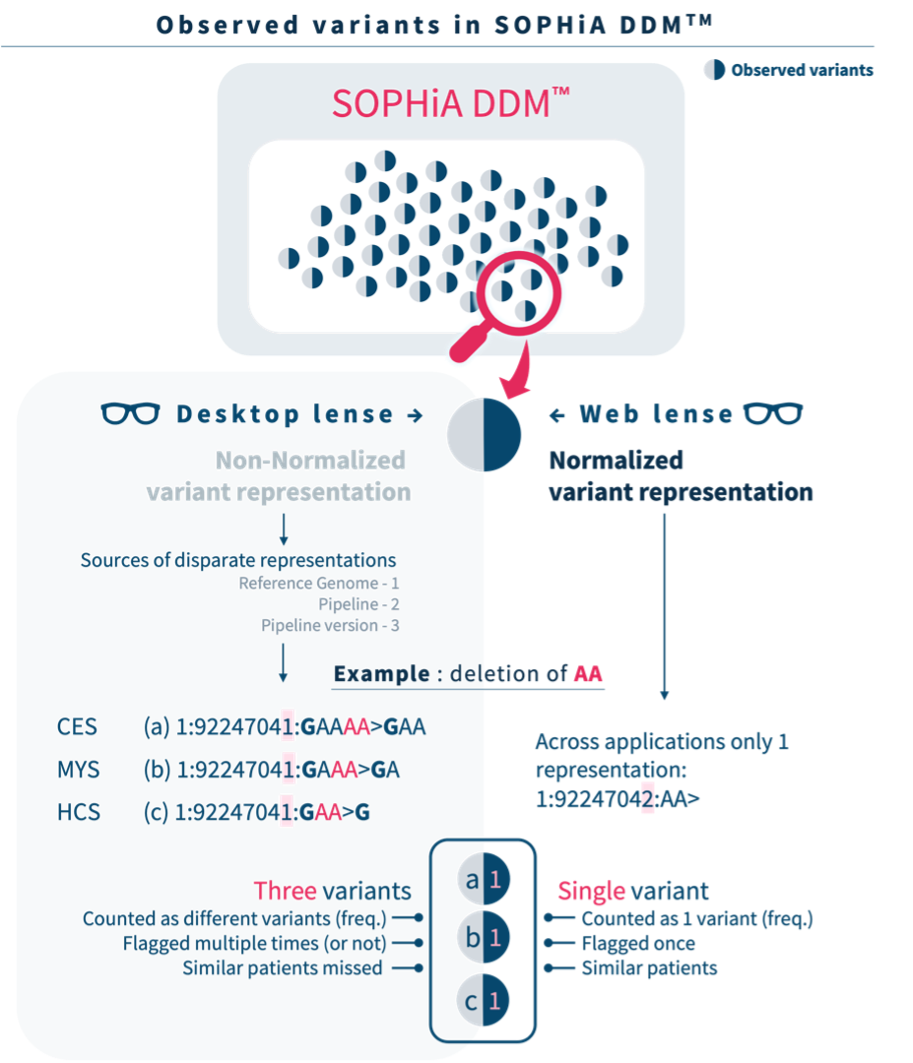
Figure 1 – Variant Normalization brings significant improvements in the management of user annotations and statistics

We have boosted the way we handle variant identification by implementing a comprehensive normalization to fully aggregate disparate variant representations – such as trimmed, aligned, lifted across reference genomes, etc. – into a normalized, stable, consistent and standardized variant data model.

This improvement, introduced by the novel enhanced annotation system (annotation v2), enables more accurate variant representation and variant frequencies calculation across applications, regardless of the reference genome, pipeline or pipeline version (as shown in the example).

Previously frequencies calculation was limited to individual applications, we can now provide cross-application variant frequencies. For example, as shown in the figure an AA deletion that previously appeared differently across applications is now unified into a single standardized representation, ensuring consistency and accuracy across the platform.

Due to the differences in variant representation between the platforms, please be aware that as of your training date on the new generation of the SOPHiA DDM™ Platform, any variant flags made will no longer sync or be counted in the SOPHiA DDM™ desktop platform. From that point forward, we strongly recommend flagging and classifying all variants directly in the new web platform to ensure they are accurately captured and tracked.

To support a smooth transition any variants flags made in the desktop will be synced with the web interface via a daily overnight update, i.e., expect a 24-hour delay.

Desktop access custom filters will not be automatically transferred to the new generation of the SOPHiA DDM™ Platform due to the difference in system architecture. However, our team will personally support in re-creating these in the new platform and include a demonstration during your training to ensure you feel confident and independent re-creating them and using them on the new platform.

We automatically recreate virtual panels for you; however, it remains your responsibility to review and confirm their content to ensure accuracy and alignment with your requirements, as any unverified discrepancies could impact your analyses.

Requirements / Access

Recommended requirements:
• Operating System: Microsoft Windows 10 (64 bit) or later. Mac OS X 11 or later.
• Browser: Google Chrome™ web browser version 100 and MS Edge version 99.
• Minimal screen resolution of 1280 x 800 pixels (16:10). For optimal display performance we recommend a screen resolution of 1980 x 800 pixels.
• Recommended Internet connection speed: > 2Mbps (minimum, 12 hours for 10 GB run), >20Mbps (recommended, 1.5 hours for 10 GB run) > 100Mbps (preferred, 17 minutes for 10 GB run), >200Mbps (ideal, 7 minutes for 10 GB run).

Please, ensure that you have updated to the IAM 2-factor authentication. If you are unable to reach our SOPHiA DDM™ web platform, please contact your IT administrator to whitelist our URL and ensure the site is not blocked on your networks.

For new users: IAM 2-factor authentication is used to access to the SOPHiA DDM™ Platform. Before trying to login with the IAM two-factor authentication system, your organization’s IT department may need to adjust your local firewall settings to ensure that IAM.SOPHIAGENETICS.COM can be reached from your network. To determine if this change needs to be made, please try to open this URL (https://iam.sophiagenetics.com). If you cannot open it, please contact your organization’s IT department to ensure the site is not blocked on your networks.

Yes, opening web based SOPHiA DDM™ Platform on a personal laptop from home is possible. Please confirm with your organization and according to your internal policies that you are allowed to do so. You need to ensure that your computer meets the hardware and software requirements for an optimized performance of the platform.

Data security/privacy/data storage

There are no changes to data management, security, or storage. Data protection remains at the core of our platform (HIPAA and GDPR compliant, ISO/IEC 27001:2022, ISO/IEC 27017:2015 and ISO/IEC 27018:2019 certified, Strict access control, End-to-end encryption. Microsoft Azure cloud-based data storage, Distributed file system, pseudonymized genomic data separated from patient data).

SOPHiA GENETICS products are for Research Use Only and not for use in diagnostic procedures unless specified otherwise.

SOPHiA DDM™ Dx Hereditary Cancer Solution, SOPHiA DDM™ Dx RNAtarget Oncology Solution and SOPHiA DDM™ Dx Homologous Recombination Deficiency Solution are available as CE-IVD products for In Vitro Diagnostic Use in the European Economic Area (EEA), the United Kingdom and Switzerland. SOPHiA DDM™ Dx Myeloid Solution and SOPHiA DDM™ Dx Solid Tumor Solution are available as CE-IVD products for In Vitro Diagnostic Use in the EEA, the United Kingdom, Switzerland, and Israel. Information about products that may or may not be available in different countries and if applicable, may or may not have received approval or market clearance by a governmental regulatory body for different indications for use. Please contact us to obtain the appropriate product information for your country of residence.

All third-party trademarks listed by SOPHiA GENETICS remain the property of their respective owners. Unless specifically identified as such, SOPHiA GENETICS’ use of third-party trademarks does not indicate any relationship, sponsorship, or endorsement between SOPHiA GENETICS and the owners of these trademarks. Any references by SOPHiA GENETICS to third-party trademarks is to identify the corresponding third-party goods and/or services and shall be considered nominative fair use under the trademark law.

SOPHiA DDM™ Overview
Unlocking Insights, Transforming Healthcare
Learn About SOPHiA DDM™ 
SOPHiA DDM™ for Genomics

Oncology 

Rare and Inherited Disorders

Add-On Modules

SOPHiA DDM™ for Radiomics
Unlock entirely novel insights from your radiology images
Learn About SOPHiA DDM™ for Radiomics 
SOPHiA DDM™ for Multimodal
Explore new frontiers in biology and disease through novel insights
Learn About SOPHiA DDM™ for Multimodal
Professional Services
Accelerate breakthroughs with our tailored enablement services
Learn About our Professional Services