
Menu
Menu
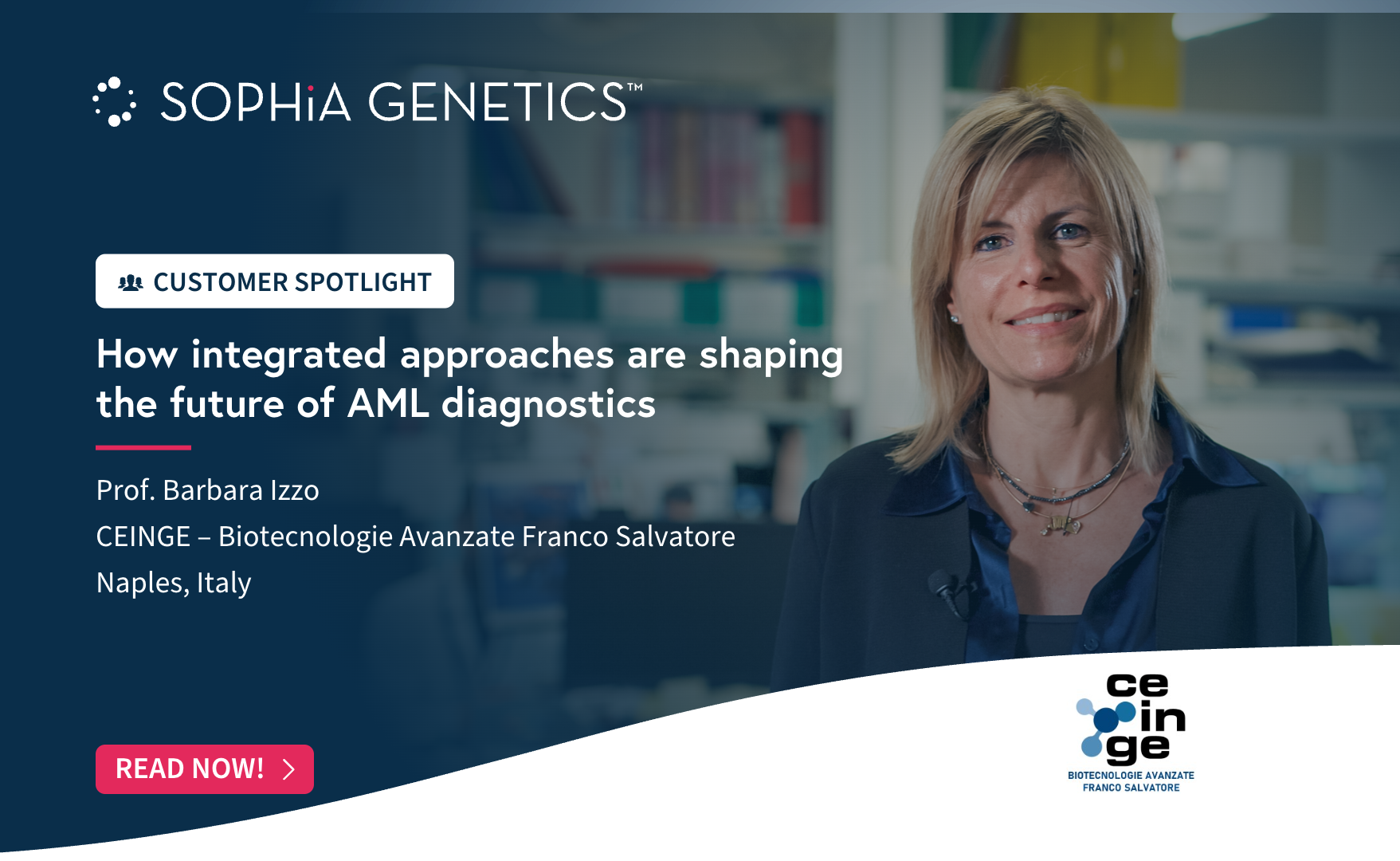
Prof. Barbara Izzo and her team at CEINGE – Biotecnologie Avanzate opened the doors of their laboratory to discuss the growing importance of integrated molecular approaches in the diagnosis of acute myeloid leukemia (AML).

Precision oncology is reshaping cancer care, with genomics increasingly guiding diagnosis and therapeutic decisions. At the heart of this transformation are companion diagnostics (CDx), essential tools to ensure patients receive the right treatment at the right time. However, despite remarkable scientific advances, pharmaceutical companies continue facing a persistent challenge: how to bring precision therapies to market faster while ensuring efficiency, accuracy, and broad patient access?
To meet these demands, CDx pathways must evolve. They must align with regulatory requirements, offer short turnaround times (TAT) from development to commercialization, scale effectively, and guarantee equitable access worldwide.
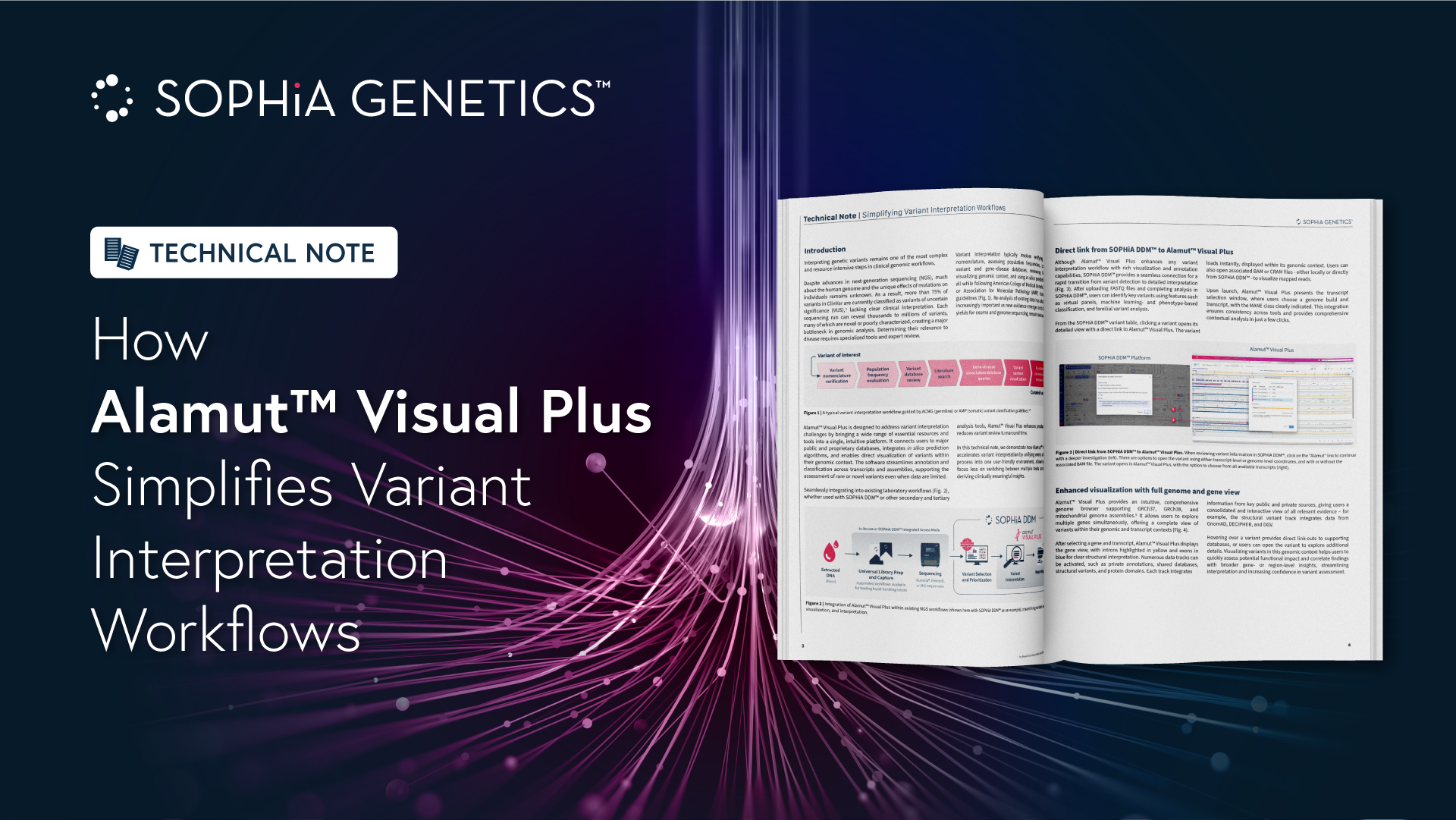
Discover how Alamut™ Visual Plus helps you navigate variant interpretation evidence faster and with greater confidence in this clear, practical guide.
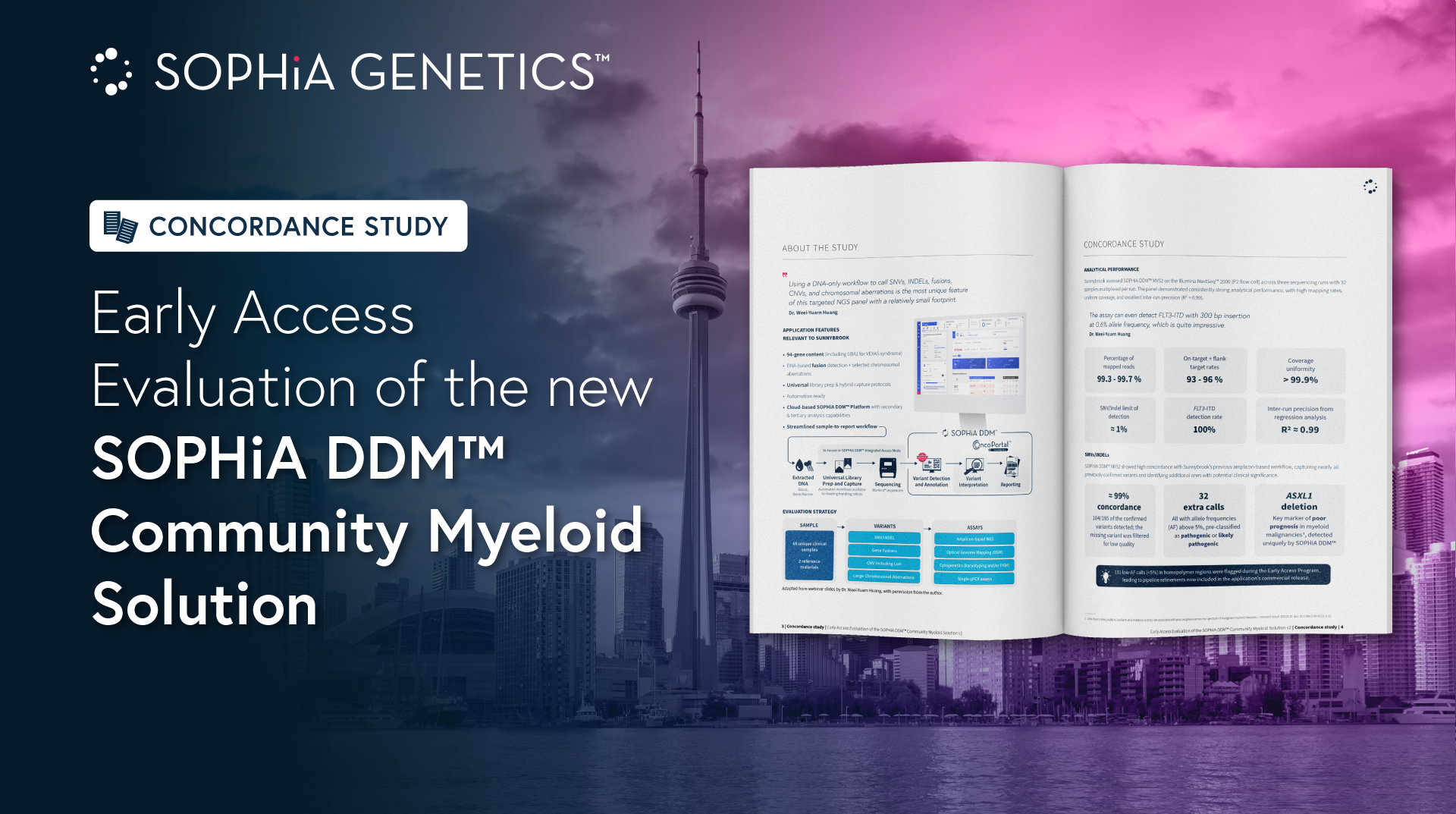
Adapted from Dr. Weei-Yuarn Huang’s (Sunnybrook Health Centre, Ontario, Canada) presentation during the webinar “Evaluating Next-Generation Sequencing Solutions for Real-World Clinical Needs in Myeloid Malignancy,” with permission from the author - This concordance study demonstrates the strong analytical performance of the new SOPHiA DDM™ Community Myeloid Solution and its potential to streamline and consolidate myeloid […]
Recently, AstraZeneca, in collaboration with NVIDIA, Memorial Sloan Kettering Cancer Center (MSKCC), and SOPHiA GENETICS, published a perspective paper in npj Artificial Intelligence exploring how Multimodal Artificial Intelligence (MMAI) is redefining oncology, from research to clinical practice, and highlighting the need for clear standards and regulatory frameworks.
This article digest summarizes the paper’s key insights, showcasing how cross-industry stakeholders are already applying MMAI in oncology, from drug development to clinical decision-making, translating innovation into real-world patient benefits.
Hear Dr. Gilles Millat speak about the expansion of cardiogenetic testing and how the SOPHiA DDM™ Cardio Peer Network strengthens variant classification workflows.

Acute myeloid leukemia (AML) remains one of the most genomically complex hematologic malignancies. As new biomarkers and targeted therapies continue to reshape disease classification, next-generation sequencing (NGS) plays an increasingly central role in diagnosis, prognosis, and treatment selection. In this article, adapted from Dr. Hubert Tsui’s presentation at a recent webinar, we explore how NGS fits within the AML patient journey, from first evaluation to meaningful insights.
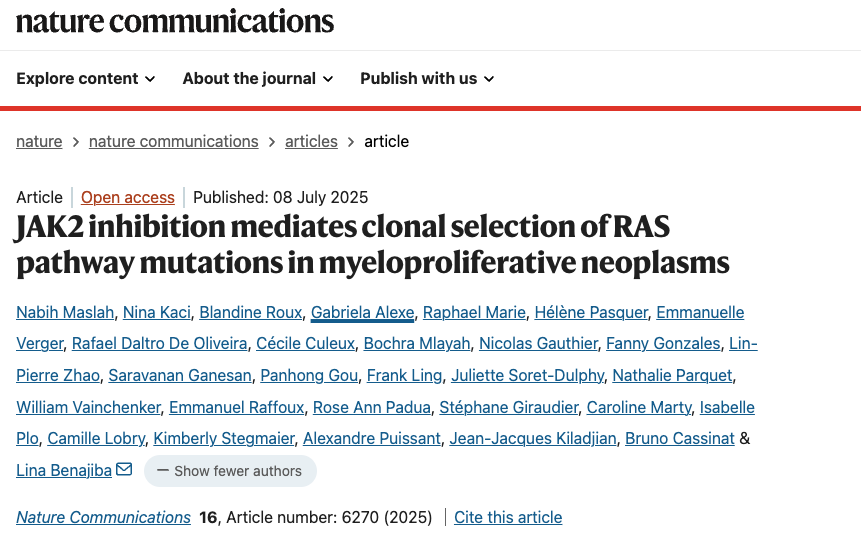
Maslah et al. present a translational study exploring how ruxolitinib and other JAK inhibitors influence clonal evolution in myeloproliferative neoplasms (MPN). Using a SOPHiA DDM™ for Myeloid Malignancies application for evaluation and longitudinal monitoring, the study highlights how treatment pressure can select for RAS pathway mutations, ultimately impacting prognosis and disease progression. Our infographic distills […]
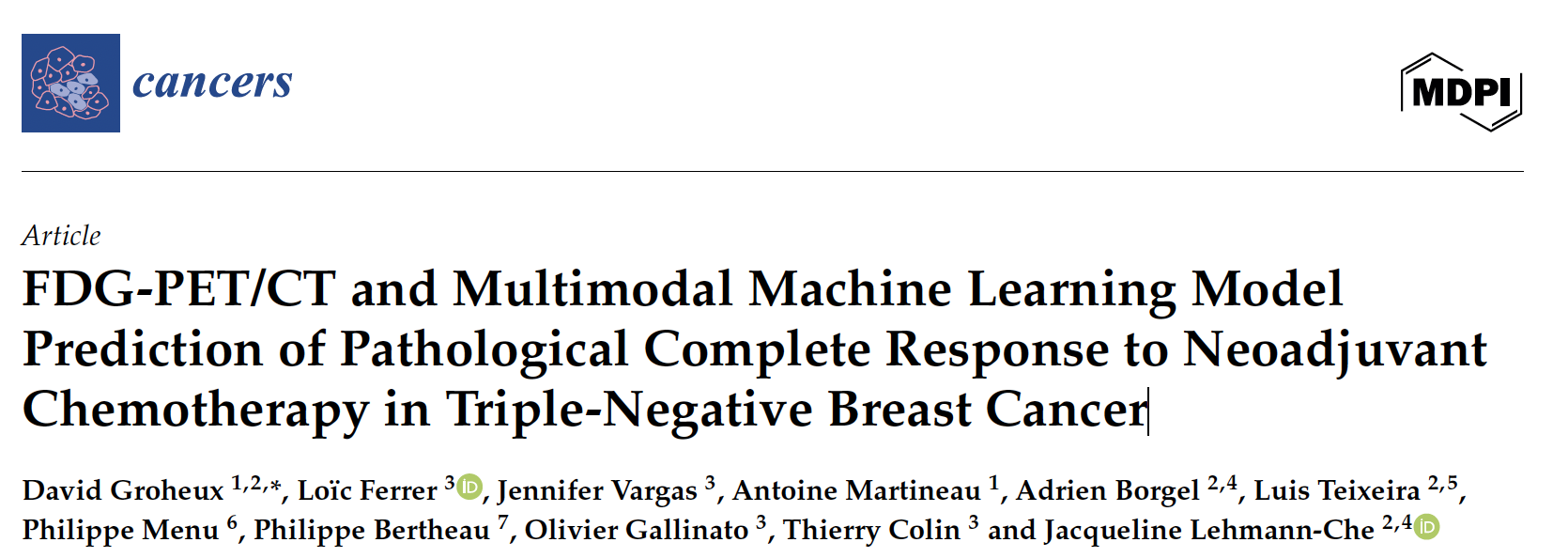
Explore this recent multimodal study to learn how applying machine learning to baseline multimodal data can help predict pathological complete response (pCR) status after neoadjuvant chemotherapy (NAC) for triple-negative breast cancer (TNBC) patients, leading to the proposal of more personalized treatment options.
Discover how a patient from São Paulo, Brazil, finally found answers after decades of uncertainty thanks to the dedicated efforts of the Bioma Genetics Laboratory.
SOPHiA GENETICS products are for Research Use Only and not for use in diagnostic procedures unless specified otherwise.
SOPHiA DDM™ Dx Hereditary Cancer Solution, SOPHiA DDM™ Dx RNAtarget Oncology Solution and SOPHiA DDM™ Dx Homologous Recombination Deficiency Solution are available as CE-IVD products for In Vitro Diagnostic Use in the European Economic Area (EEA), the United Kingdom and Switzerland. SOPHiA DDM™ Dx Myeloid Solution and SOPHiA DDM™ Dx Solid Tumor Solution are available as CE-IVD products for In Vitro Diagnostic Use in the EEA, the United Kingdom, Switzerland, and Israel. Information about products that may or may not be available in different countries and if applicable, may or may not have received approval or market clearance by a governmental regulatory body for different indications for use. Please contact us to obtain the appropriate product information for your country of residence.
All third-party trademarks listed by SOPHiA GENETICS remain the property of their respective owners. Unless specifically identified as such, SOPHiA GENETICS’ use of third-party trademarks does not indicate any relationship, sponsorship, or endorsement between SOPHiA GENETICS and the owners of these trademarks. Any references by SOPHiA GENETICS to third-party trademarks is to identify the corresponding third-party goods and/or services and shall be considered nominative fair use under the trademark law.